
A relative clause is a subordinate clause that gives extra information about a noun, usually introduced by a relative pronoun such as who, which, that, whose, where, or when. According to BBC Bitesize, these clauses can be defining (no commas needed) or non-defining (set off with commas). Two quick examples show how they work:
- The dog that lives next door barks every morning. (clause at the end)
- My teacher, who has worked here for ten years, knows every pupil by name. (clause embedded in the middle)
Pro Tip: Start by adding relative clauses to the end of sentences. Once children feel confident there, move the clause into the middle. That single step removes most of the punctuation confusion early on.
Key Takeaways
Relative clauses are a Year 5 National Curriculum objective that pupils must be able to identify, punctuate, and write independently by the end of KS2, with who and which as the best starting pronouns and the lift test as the most reliable punctuation check.
| Point | Details |
|---|---|
| Start with the right pronouns | Teach who and which first; add that, then whose, where, and when once pupils are secure. |
| End before embedding | Build confidence with end-of-sentence clauses before moving the clause into the middle of a sentence. |
| Commas follow a clear rule | Non-defining clauses need commas on both sides; defining clauses (especially with that) take no commas. |
| SATs targets punctuation most | The most common GPS error is a missing closing comma on a non-defining clause; targeted practice fixes it. |
| Thepocketmoneygame supports home practice | Short, reward-linked sessions with voice support help children reinforce relative clause skills between lessons. |
Table of Contents
- What are relative clauses in KS2 English?
- Which relative pronouns do KS2 children need to know?
- How do defining and non-defining relative clauses differ?
- Where does a relative clause sit in a sentence?
- Ready-to-run KS2 activities for teaching relative clauses
- Where can you find high-quality KS2 worksheets and resources?
- How do relative clauses appear on KS2 SATs papers?
- Supporting pupils with additional learning needs
- Why the "embed it first" instinct usually backfires
- Thepocketmoneygame makes home practice feel worth it
- Sources
What are relative clauses in KS2 English?
A relative clause is a type of subordinate clause — meaning it cannot stand alone as a sentence. It attaches to a noun or noun phrase and tells the reader something more specific about it.
The clearest way to see this is through a before-and-after pair:
- Before: The girl won the race. She trained every day.
- After: The girl who trained every day won the race.
Two short sentences become one richer sentence. The relative clause (who trained every day) modifies the noun girl and removes the need for a second sentence entirely. For KS2 writers, that is a practical tool: it adds detail without adding length, and it signals the kind of sentence variety that markers reward in Year 5 and 6 writing.
Relative clauses also help children build more precise noun phrases, which connects directly to vocabulary building at KS2 and the wider goal of writing with clarity and control.
Which relative pronouns do KS2 children need to know?
PlanBee aligns the following pronouns with the National Curriculum sequence for KS2. Each one connects to a specific type of noun:
- Who — refers to people. The boy who scored the goal celebrated loudly.
- Which — refers to things or animals. The book, which had a torn cover, was still readable.
- That — refers to people or things (defining clauses only). The cake that Mum baked disappeared quickly.
- Whose — shows possession. The girl whose bag was lost found it in the hall.
- Where — refers to a place. The park where we play is being renovated.
- When — refers to a time. Summer, when the days are longest, is her favorite season.
Teaching order: Introduce who and which first. They map directly onto people and things, which makes them intuitive for Year 5 pupils. Add that next, then bring in whose, where, and when once children are secure. Resourcefully notes that delaying the trickier pronouns reduces cognitive overload and keeps early practice sessions feeling manageable.
How do defining and non-defining relative clauses differ?
This is where punctuation enters the picture, and it is the point where many KS2 pupils stumble.
Defining relative clauses identify which specific noun you mean. Remove the clause and the sentence loses its precise meaning. No commas are used.
Without that bit the postman, you do not know which dog. The clause is essential, so no commas.
Non-defining relative clauses add bonus information. The sentence still makes sense without them. Commas set the clause off on both sides.
Remove which loves long walks and the sentence still works. The commas signal that the clause is extra.
| Feature | Defining | Non-defining |
|---|---|---|
| Removes essential meaning if deleted? | Yes | No |
| Commas used? | No | Yes, on both sides |
| Can use "that"? | Yes | No |
| Example pronoun | that, who, which | who, which, whose |
A common pupil error on SATs papers is forgetting the closing comma on a non-defining clause, or adding commas around a defining clause that uses that. Targeted practice with paired commas, such as the Twinkl embedded clauses resource, builds the pattern recognition children need.
Pro Tip: Try the "lift test." Ask pupils to lift the clause out of the sentence. If the sentence still makes sense and the meaning stays clear, it is non-defining and needs commas. If the meaning changes or the sentence feels incomplete, it is defining and needs no commas.
Where does a relative clause sit in a sentence?
Relative clauses appear in two positions, and each one has different punctuation demands.
At the end of a sentence — the simpler starting point:
No comma is needed before that. The clause follows the noun naturally, and children can focus on choosing the right pronoun without worrying about paired commas.
Embedded in the middle — the more complex position:
Now the clause sits between two commas, interrupting the main clause. Both commas are required. Oak National Academy recommends reading the sentence aloud to find natural pauses — those pauses usually show where the commas belong.
The teaching sequence matters here. Start with end-of-sentence clauses so pupils build confidence with pronoun choice. Then model embedding the same clause in the middle of the sentence, showing how the commas move with it. That side-by-side comparison makes the punctuation logic visible.
Ready-to-run KS2 activities for teaching relative clauses
These activities move from guided recognition to independent writing, which is the progression that works best in a mixed-ability Year 5 or 6 class.
Activity 1: Relative clause relay
- Write five simple sentences on the board (one noun per sentence, e.g., The scientist discovered a new planet).
- Pupils work in pairs. Partner A adds a relative clause at the end; Partner B rewrites the sentence with the clause embedded.
- Pairs swap and check each other's commas.
- Share two or three examples with the class and discuss any pronoun or punctuation disagreements.
Materials: Mini whiteboards or scrap paper. No printing needed.
Activity 2: Clause-adding cards
- Prepare a set of noun cards (the teacher, the old library, Monday morning) and a set of relative clause cards (who always arrives early, which was built in 1902, when the alarm goes off).
- Pupils match a noun card to a clause card, then write the full sentence, deciding where to place the clause and whether commas are needed.
- Extend by asking pupils to write their own clause cards for a partner to match.
Differentiation:
- Weaker learners: Provide sentence frames (The ___, who ___, ...) and limit pronouns to who and which.
- Stronger learners: Challenge them to embed the clause and use whose or where; ask them to write two versions of each sentence (defining and non-defining) and explain the punctuation difference.
Activity 3: Embedded-clause punctuation clinic
Show pupils five sentences where the commas have been removed from non-defining clauses. Their task is to insert the commas correctly, then justify each decision using the lift test. This works well as a KS2 reading comprehension warm-up because it trains pupils to notice clause boundaries in texts they read, not just texts they write.
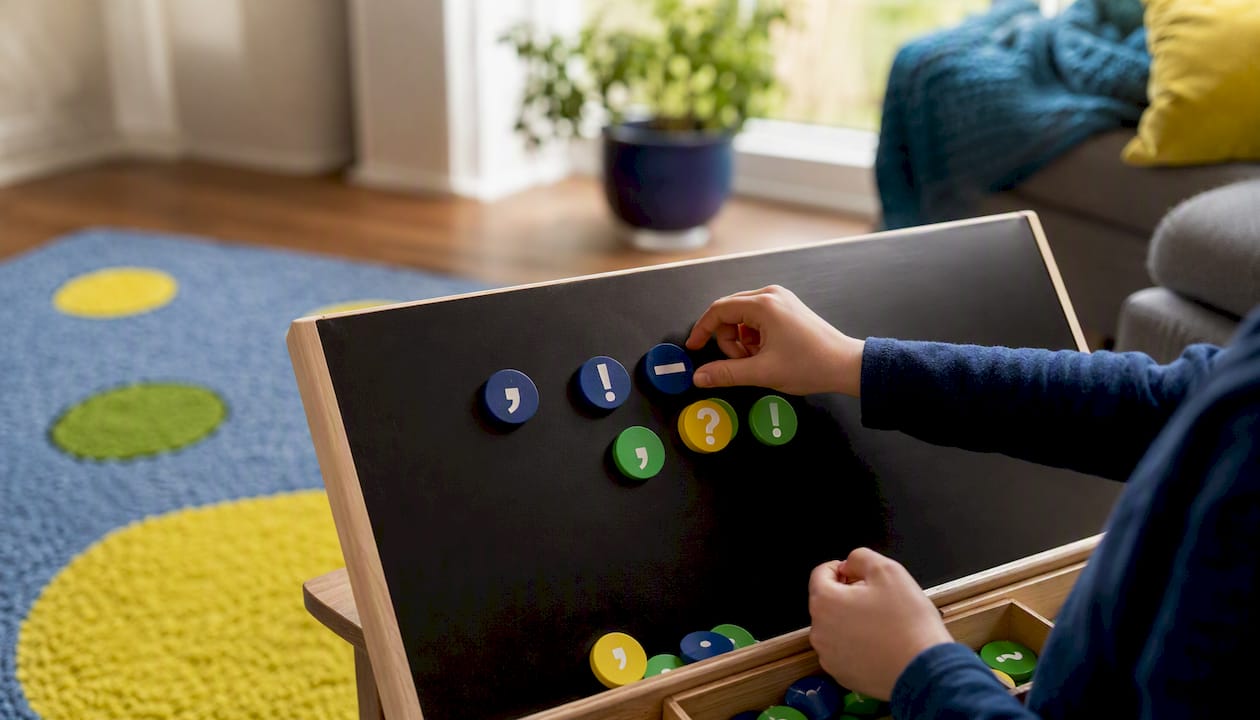
Classroom activities like these, including fill-in clause cards and punctuation clinics, are widely used in UK primary classrooms and pair well with visual scaffolds.
Where can you find high-quality KS2 worksheets and resources?
Three authoritative UK sources cover relative clauses well, each with a slightly different strength:
| Resource | What it offers | Best used for |
|---|---|---|
| BBC Bitesize | Short video and interactive examples showing both embedded and end-of-sentence clauses | Quick starter, homework, or revision |
| Oak National Academy | Full lesson slides and teacher notes grouping relative clauses with subordinate clause instruction | Full lesson planning, Year 6 |
| PlanBee | Curriculum-aligned pronoun reference and lesson packs | Guided reading sessions, SATs preparation |
Twinkl's printable worksheet on paired commas for embedded clauses is a useful addition for targeted punctuation practice, particularly in the run-up to SATs. Always check the licence terms before printing for whole-class use.
How do relative clauses appear on KS2 SATs papers?
Relative clauses are a Year 5 National Curriculum objective and appear regularly on the KS2 Grammar, Punctuation and Spelling (GPS) paper. Pupils typically face four question types:
- Underline the relative clause in a given sentence.
- Insert commas to punctuate a non-defining clause correctly.
- Choose the correct pronoun from a multiple-choice list.
- Add a relative clause to complete or extend a sentence.
SATs-style practice item 1 (identify):
Answer: which opened last year (including the commas as boundary markers).
SATs-style practice item 2 (punctuate):
Answer: My uncle*,** who is a firefighter**,** visited our school.*
What examiners look for: Both commas present on a non-defining clause; the correct pronoun for the noun type (person = who, not which); and no comma before that in a defining clause. The most frequent errors are a missing closing comma and using which for a person.
Supporting pupils with additional learning needs
Children with dyslexia, ADHD, or English as an additional language (EAL) often find relative clauses tricky not because the concept is hard, but because the sentence gets long and the working memory load increases. Short, structured steps help.
- Model first, always. Write a sentence on the board, think aloud as you choose the pronoun, and place the clause before asking pupils to try.
- Color-code the clause. Write the main clause in black and the relative clause in blue. Pupils can see exactly where the clause starts and ends, which makes the comma positions obvious.
- Use movable clause cards. Write the main clause and the relative clause on separate strips of card. Pupils physically move the clause strip to the end of the sentence, then slide it into the middle. The hands-on step reduces the abstract load.
- Read aloud as a diagnostic. Oak National Academy recommends this specifically: natural pauses in speech usually reveal where commas belong. Pupils who struggle to hear the pause benefit from hearing a partner read the sentence first.
- Sentence frames for EAL learners. Provide frames such as The ___, who ___, ... so pupils can focus on the clause content rather than the sentence architecture.
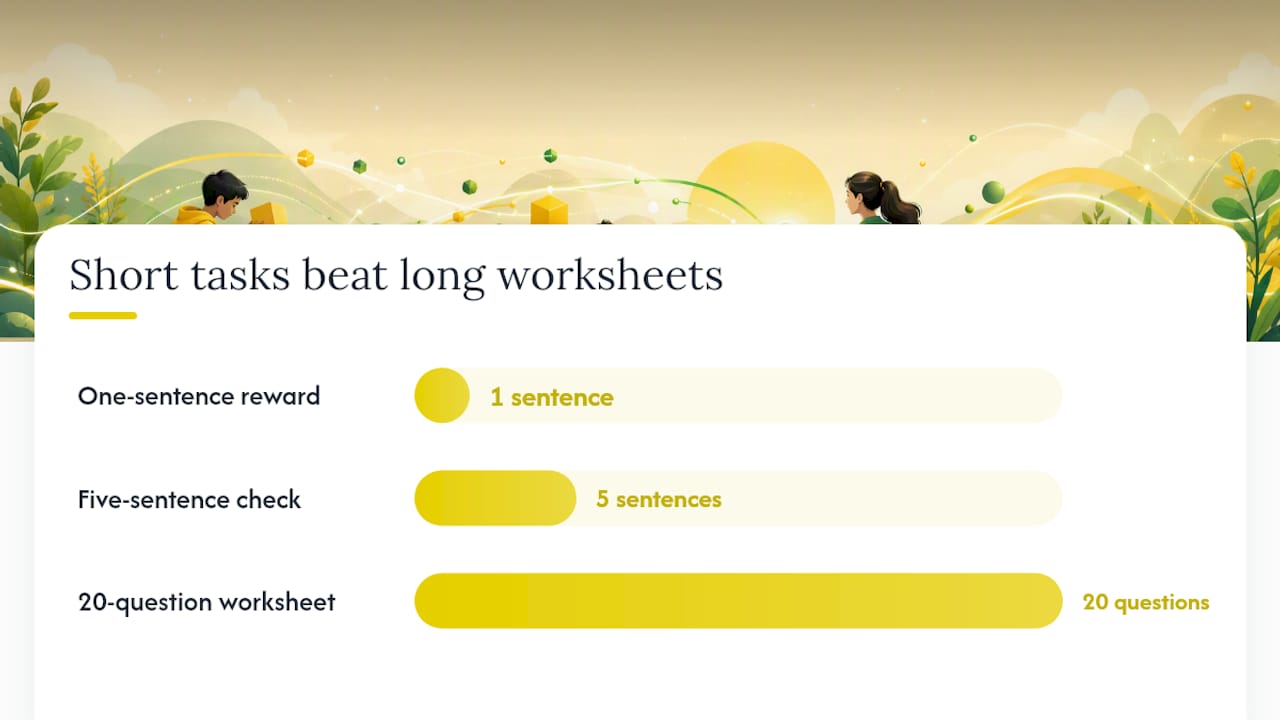
For pupils with attention differences, short micro-tasks with immediate feedback work better than long worksheets. A five-sentence punctuation check, completed and marked in under ten minutes, builds the pattern more reliably than a 20-question sheet completed reluctantly.
Pro Tip: For children who find it hard to stay focused, try a "one sentence, one reward" structure at home. They write or identify one relative clause correctly, get immediate praise (or a small reward), then move to the next. That rhythm of effort and feedback is exactly what keeps reluctant learners engaged.
Why the "embed it first" instinct usually backfires
Most teachers instinctively teach embedded clauses first because that is how they appear in model texts and writing frames. The problem is that embedding a clause in the middle of a sentence requires pupils to manage three things simultaneously: choosing the right pronoun, deciding whether commas are needed, and keeping the main clause grammatically intact on both sides of the interruption.
That is a lot. And when children get it wrong, they often conclude that relative clauses are "too hard" and avoid them in their own writing entirely, which is the opposite of what you want.
Starting at the end of the sentence removes two of those three demands at once. The pronoun choice is still there, but the comma question is simpler (often no comma at all with a defining clause), and the main clause does not need to be split. Once that feels natural, embedding is a small, logical next step rather than a leap.
The read-aloud check is similarly underused. Pupils who read their sentences aloud and pause naturally at clause boundaries tend to place commas correctly without needing to memorize a rule. It turns an abstract grammar point into something they can hear, which is a more durable learning route for most children.
Thepocketmoneygame makes home practice feel worth it
Classroom time for grammar is always limited. The gap between a lesson on relative clauses and a child using them confidently in their own writing is usually filled by practice at home, and that is where motivation tends to drop.
Thepocketmoneygame is built for exactly that gap. Children aged 5–11 practice spelling, reading, and grammar through short, adaptive sessions where every correct answer earns real pocket money, controlled entirely by you as the parent. The platform includes voice read-aloud support (helpful for pupils who benefit from hearing sentences before punctuating them), adaptive difficulty that adjusts to your child's level, and a parent dashboard so you can see progress at a glance. For children with ADHD or dyslexia, the reward-based learning approach keeps sessions short, focused, and genuinely motivating. Sessions run in a browser with no download needed, and there are no ads. Start a free 7-day trial at Thepocketmoneygame and see whether ten minutes a day changes how your child feels about grammar practice.
Sources
These curriculum-aligned resources are worth bookmarking whether you are planning a full lesson or looking for a five-minute starter:
- What are relative clauses? - KS2 English - BBC Bitesize
- What is a Relative Clause? KS2 Guide With Examples
- New subordinating conjunctions and relative pronouns KS2 | Y6 English | Lesson Resources | Oak National Academy
- Relative Pronouns KS2 | PlanBee
- Using commas for embedded clauses (Twinkl resource)