
What every parent needs to know about KS2 reading comprehension
KS2 reading comprehension covers six core skill domains that children develop progressively from Year 3 through Year 6, and knowing exactly what those domains are makes all the difference when you're trying to help at home. The UK National Curriculum organizes these skills under the VIPERS framework: Vocabulary, Inference, Prediction, Explanation, Retrieval, and Summarising. By the end of Year 6, children sit KS2 statutory reading tests that assess all six domains across three text types: fiction, non-fiction, and poetry.

Progression through KS2 is deliberate. In Years 3 and 4, children build literal understanding, finding information that is clearly stated. By Years 5 and 6, the expectation shifts toward inference, critical analysis, and supporting answers with textual evidence. Reading comprehension year 6 is particularly demanding because children must handle longer, more complex texts while preparing for the reading load of secondary school.
Here are the trusted resources parents and educators reach for most often, organized by purpose:
- For curriculum-aligned worksheets and SATs practice: Twinkl offers differentiated packs for every year group, including dedicated reading comprehension year 5 and Year 6 assessment packs with mark schemes.
- For free, accessible practice: BBC Bitesize provides interactive reading activities tied directly to the National Curriculum, covering all VIPERS skill areas.
- For evidence-based teaching strategies: The Education Endowment Foundation publishes research-backed guidance on comprehension strategies including predicting, visualizing, questioning, and summarizing.
- For adaptive, reward-based home practice: Thepocketmoneygame offers original reading comprehension content with adaptive difficulty and voice support, covering KS1 and KS2 curriculum goals.
- For ability-differentiated texts: Literacy Shed Plus uses an ATOS readability score to match texts to year-group expectations, so children work at the right level of challenge without frustration.
How reading comprehension is actually taught in KS2 classrooms
The VIPERS framework is the backbone of comprehension teaching across UK primary schools, and understanding it helps you speak the same language as your child's teacher. Each letter targets a distinct thinking skill, and teachers use it as both a teaching tool and a diagnostic framework to spot exactly where a child is struggling.
Here is what each domain looks like in practice:
- Vocabulary: Children explain what a word or phrase means in context, not just from memory. Example question: "What does 'reluctant' mean in this sentence?"
- Inference: Children work out meaning that is not directly stated, using clues from the text. Example: "How can you tell the character is nervous?"
- Prediction: Children use evidence from the text to suggest what might happen next.
- Explanation: Children explain how a writer creates an effect, or why a character behaves a certain way.
- Retrieval: Children locate information stated clearly in the text. Example: "What did the character take from the table?"
- Summarising: Children identify the main idea of a paragraph or whole text in their own words.
Teachers scaffold this progression carefully. In Year 3, most questions are retrieval-based, where the answer is visible on the page. By Year 6, the majority of marks in SATs come from inference and explanation, which require children to read between the lines and justify their thinking.
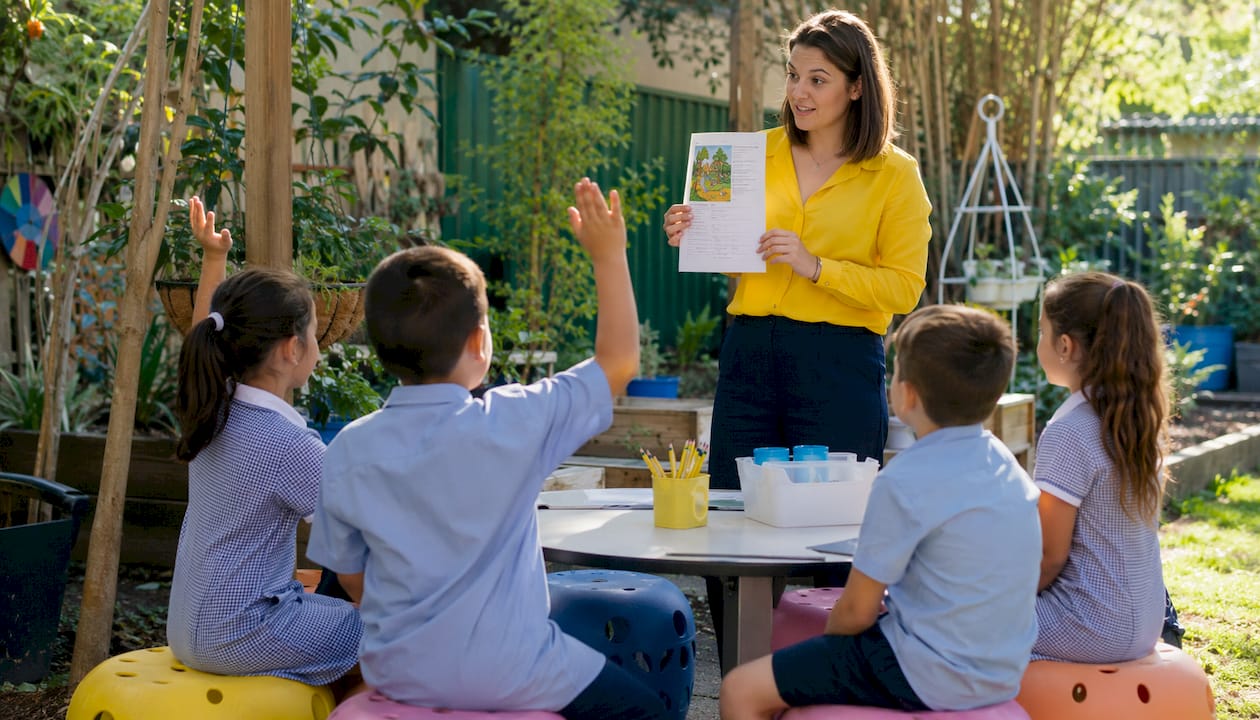
Vocabulary and phonics feed directly into comprehension. A child who can decode every word but lacks the vocabulary to understand what those words mean will still struggle to answer questions accurately. Formative assessment, through teacher observation, reading journals, and short comprehension tasks, helps educators identify which VIPERS domain needs more attention for individual children. That targeted approach is far more effective than generic practice.
Practical resources and activities that actually build comprehension skills
The best resources for KS2 comprehension practice are the ones that match both the curriculum and your child's current level. Differentiation matters here. A child working below year-group expectations needs texts they can access independently before tackling harder questions, while a child working above needs material that genuinely stretches their thinking.
Online and printable resources worth using:
- Twinkl SATs packs for Year 5 and Year 6 include reading booklets, answer booklets, and mark schemes that mirror the actual SATs format. The Year 6 pack covers fiction, non-fiction, and poetry, exactly as the real test does.
- BBC Bitesize reading activities are free, interactive, and organized by year group. They work well for short, low-pressure practice sessions.
- Literacy Shed Plus stages its comprehension texts by readability level rather than year group label, so a Year 4 child working below expectations can practice with appropriately challenging material without the stigma of a lower year-group label.
- Education Endowment Foundation guidance is aimed at teachers but gives parents a clear picture of which strategies have the strongest evidence behind them.
Activities targeting specific comprehension skills:
- Retrieval practice: After reading a short passage, ask your child to find three specific facts. Time them if they enjoy a challenge, but keep it relaxed.
- Inference journals: Ask your child to write one sentence explaining what a character is feeling and one phrase from the text that proves it.
- Vocabulary in context: Pick two unfamiliar words from the day's reading. Ask your child to explain the meaning using only the surrounding sentences, not a dictionary.
- Summarising in six words: After each chapter or passage, challenge your child to summarize it in exactly six words. Short constraints force real thinking.
- Prediction stops: Pause mid-text and ask what they think will happen next, and why. This builds the habit of reading actively rather than passively.
- Text type variety: Rotate between fiction, non-fiction, poetry, and discussion texts across the week. Year 5 reading comprehension practice, for example, should include drama scripts, persuasive writing, and fables alongside standard stories.
Pro Tip: When choosing texts for home practice, look for the ATOS readability rating if available. A text that is slightly above your child's comfortable reading level, but not so hard it causes frustration, produces the best comprehension gains.
Aligning home practice to SATs requirements does not mean drilling past papers every night. Familiarity with the format matters, but variety in text type and skill focus builds the underlying ability that makes the test manageable.
How Thepocketmoneygame supports KS2 reading comprehension at home
Thepocketmoneygame was built by a parent with ADHD and dyslexia, and that origin shapes everything about how the platform works. It does not assume every child learns the same way or at the same pace. The platform's adaptive difficulty adjusts automatically based on how a child is performing, so the questions stay in the productive zone where learning actually happens.
For reading comprehension specifically, Thepocketmoneygame includes original content aligned to the KS1 and KS2 curriculum, covering the same skill domains children encounter in school. Voice support means children who find reading on screen difficult can still access the questions without getting stuck before they even start. That feature makes a real difference for children with dyslexia or processing difficulties.
The reward system is genuinely different from anything else available. Children earn real pocket money for correct answers, with parents controlling the reward amount and daily question cap through a parent dashboard. That combination of real stakes and parent oversight keeps motivation high without turning practice into a chore. For children who switch off during traditional worksheet practice, having something tangible to work toward changes the dynamic entirely.
Pro Tip: Use Thepocketmoneygame's parent dashboard to check which comprehension skills your child is finding hardest, then use that information to choose targeted reading activities from Twinkl or BBC Bitesize for your next home reading session. The two approaches work well together.
Adaptive learning platforms that include voice support are particularly well-suited to neurodiverse learners, and Thepocketmoneygame's design reflects that directly. Multi-child profiles mean families with more than one KS2 child can track each child's progress separately, without one child's results affecting another's settings.
Evidence-based strategies for parents and educators who want real results
The single most common mistake parents make is turning reading time into a test. Asking too many questions, correcting every stumble, or pushing through a text the child finds boring all chip away at motivation. Reading enjoyment and reading skill are not separate things. Children who read for pleasure build vocabulary and background knowledge faster, and both of those directly fuel comprehension.
Here are the strategies that research and classroom experience consistently support:
- Keep sessions short and varied. Frequent, short reading sessions with different text types maintain engagement far better than long sessions with a single book.
- Build background knowledge deliberately. When a child struggles to understand a text about, say, the water cycle or World War II, the problem is often missing context rather than weak reading skill. Watching a short documentary or having a conversation about the topic before reading can unlock comprehension that seemed impossible.
- Ask thoughtful questions, not rapid-fire ones. One or two open questions during or after reading, such as "What do you think the author wanted you to feel there?" or "Which part surprised you?", keep the conversation going without pressure.
- Focus on evidence, not just answers. When your child answers a comprehension question, gently ask: "Where in the text does it say that?" This habit of supporting answers with evidence is one of the most important KS2 skills and one of the easiest to practice at home.
- Prioritize active reading over speed. Reflective reading with questioning strategies produces deeper understanding than reading quickly through a text. Slow down and discuss.
Pro Tip: Vocabulary grows fastest through conversation, not worksheets. When you encounter an interesting word in everyday life, on a sign, in a film, or in the news, pause and talk about what it means. Children who develop this habit carry it into their reading.
For educators, formative assessment data from short comprehension tasks is most useful when it is mapped against the VIPERS domains. If a child consistently loses marks on inference questions but performs well on retrieval, that is a specific, solvable problem, not a general reading weakness. Targeted intervention on inference, using texts the child finds genuinely interesting, produces faster progress than broad comprehension practice.
Thepocketmoneygame makes reading practice something children actually want to do
Most reading comprehension tools ask children to sit down, read, and answer questions. Thepocketmoneygame flips the motivation entirely. Children earn real pocket money for every correct answer, which means they have a genuine reason to engage, not just a parent telling them they should.
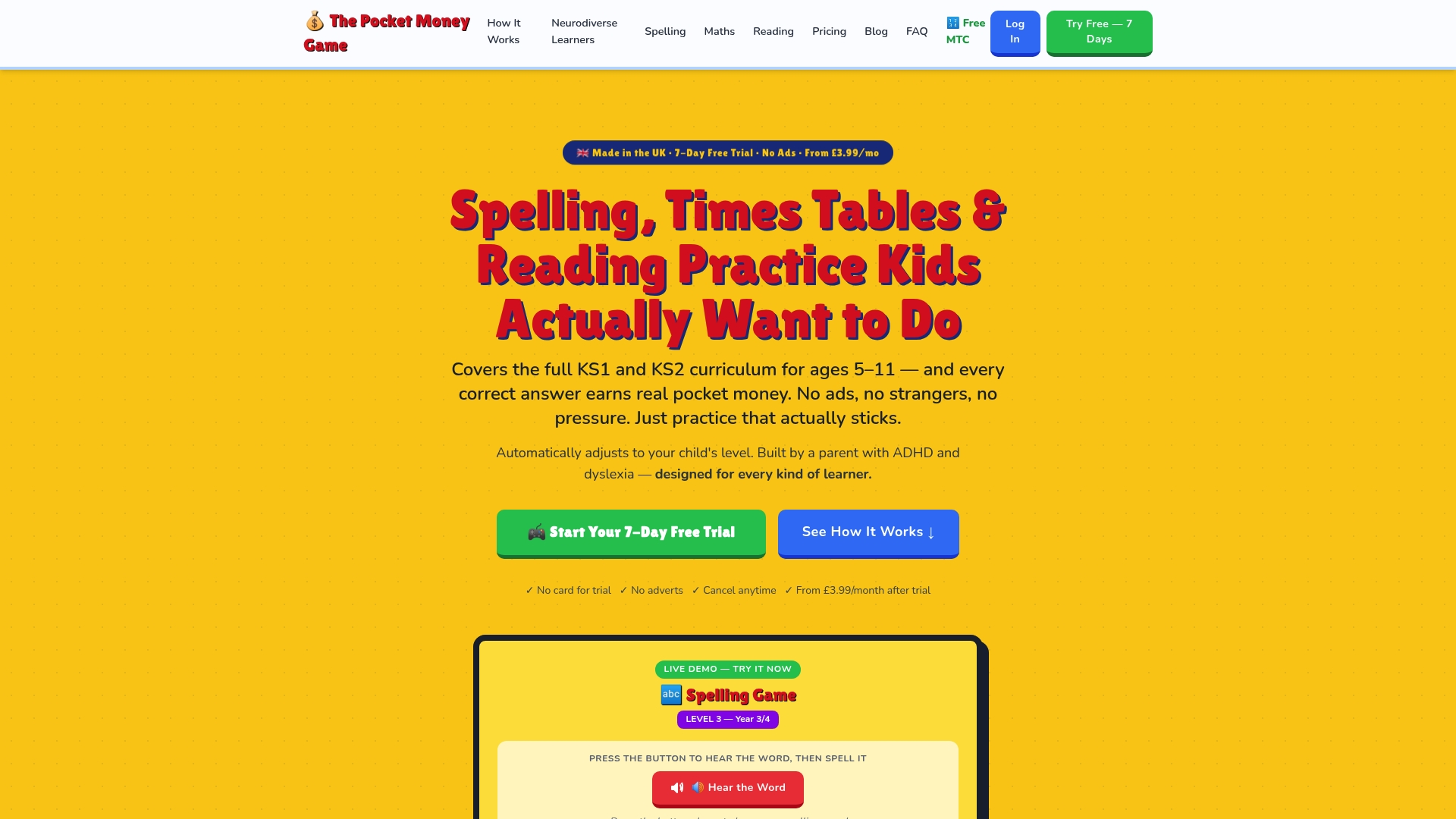
Built specifically for children aged 5–11 and aligned to the UK National Curriculum, Thepocketmoneygame covers reading comprehension practice alongside spelling and maths in one adaptive platform. The voice support feature removes the barrier that trips up so many children before they even reach the comprehension question. Parents stay in control through a dashboard that lets them set difficulty, adjust rewards, and track progress across multiple children. If your child has ADHD, dyslexia, or simply switches off during traditional practice, the neurodiverse-friendly design was built with exactly that child in mind. Start a free trial at Thepocketmoneygame and see whether your child's attitude to reading practice changes within the first week.
Key Takeaways
Effective KS2 reading comprehension support combines curriculum-aligned skill practice across all six VIPERS domains with short, varied reading sessions and evidence-based questioning strategies at home and school.
| Point | Details |
|---|---|
| VIPERS framework | Six domains (Vocabulary, Inference, Prediction, Explanation, Retrieval, Summarising) guide all KS2 comprehension teaching and assessment. |
| SATs text types | KS2 reading tests cover fiction, non-fiction, and poetry, so home practice should rotate across all three genres. |
| Background knowledge | Comprehension struggles often stem from knowledge gaps, not weak decoding; teaching the topic alongside the text closes that gap. |
| Evidence-based questioning | Asking children to support answers with textual evidence is the single most transferable comprehension habit to build at home. |
| Thepocketmoneygame | Offers adaptive, curriculum-aligned reading comprehension practice with real pocket money rewards and voice support for neurodiverse learners. |