
Self-paced learning is an instructional approach where learners control when, how fast, and often in what order they work through material, with no real-time instructor dependency. It suits busy adults, neurodivergent children, and anyone whose schedule or learning speed doesn't fit a fixed classroom timetable. If you're deciding between formats, choose self paced when flexibility and personalization matter more than live interaction.
Table of Contents
- What makes a learning experience truly self paced?
- The real benefits of self-paced learning, backed by evidence
- Common challenges: when self paced learning underperforms
- Cohort vs. self-paced vs. hybrid: how do you choose?
- How to succeed as a self-paced learner, step by step
- Designing effective self paced learning for educators and creators
- How Thepocketmoneygame shows self paced design working in practice
- What the research says about when self paced learning works
- Key Takeaways
- Why the "just give them access" approach to self paced learning almost always fails
- Thepocketmoneygame: self paced learning that actually keeps children going
- Useful sources and further reading
What makes a learning experience truly self paced?
Self-paced learning is a subset of asynchronous learning, but the two aren't the same thing. A weekly-deadline online course is asynchronous; it isn't self paced. True self-paced formats hand the learner three controls: timing (start and stop whenever), pace (spend two hours on one concept, five minutes on another), and often sequence (choose which module comes next). Minimal real-time instructor interaction is the structural tell.
Formats that qualify as genuinely self-paced:
- Module catalogs where learners pick topics in any order
- Microlearning libraries with short, standalone lessons (think five-minute video clips plus a quick quiz)
- Adaptive learning paths that adjust difficulty based on performance
- On-demand recorded courses with no cohort, no live sessions, and no submission deadlines
Formats that are not self-paced, even when online:
- Asynchronous cohort courses with weekly deadlines
- Live webinar series with required attendance
- Blended programs where a facilitator gates module access
A child working through a spelling app at her own speed on a Tuesday afternoon? Self paced. The same child joining a live virtual tutoring session every Thursday? Not self paced, even if the homework is flexible.

The real benefits of self-paced learning, backed by evidence
Flexibility is the headline benefit, but it's not the only one. Self-paced formats reduce time pressure, let learners revisit difficult concepts without embarrassment, and allow content to be tailored to individual speed. For organizations, the scalability is significant: one well-designed course can serve thousands of learners across time zones without scheduling overhead.
Who benefits most:
- Busy parents and professionals who can only learn in short windows
- Neurodivergent learners (ADHD, dyslexia, autism) who need more time on some concepts and less on others
- Learners in different time zones who can't attend live sessions
- Children who shut down under pressure and need low-stakes repetition to build confidence
Differentiated instruction is particularly powerful for learners with learning differences, because it adapts content, process, and product to reduce unnecessary cognitive load. Self-paced formats make that differentiation structurally possible in a way that a fixed-pace classroom simply can't.
Pro Tip: The highest-impact use of self paced learning isn't replacing instruction entirely. It's filling the gap between formal lessons and mastery practice, the repetition zone where most children fall behind because there's no time in a 30-student classroom to drill each child at their own level.
Common challenges: when self paced learning underperforms
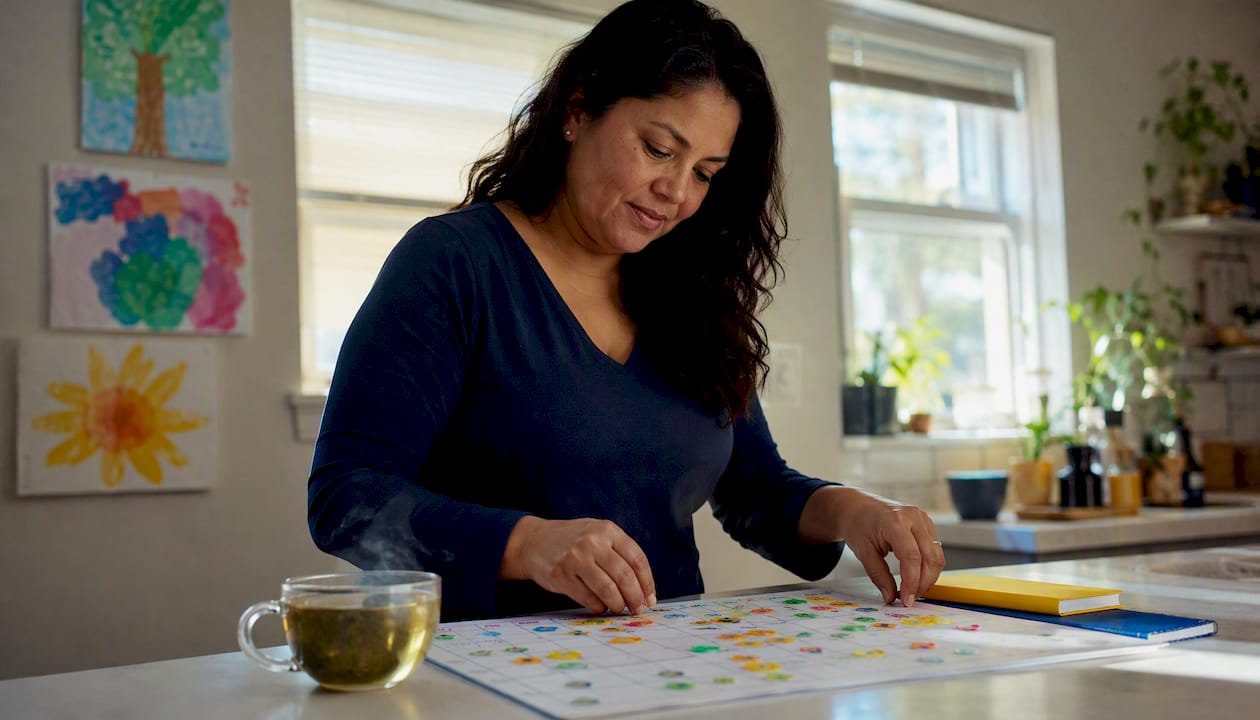
Self-paced formats fail in predictable ways. Knowing the red flags before you start saves a lot of frustration.
- Procrastination without structure. When there's no deadline, many learners drift. Adults and children alike tend to delay starting unless something external creates urgency.
- Weak accountability. Without scaffolding, the autonomy that makes self paced learning attractive also makes it easy to quietly abandon.
- Loss of social learning. Peer discussion, debate, and collaborative problem-solving don't happen naturally in a solo module. Skills that depend on social modeling (public speaking, team negotiation) are genuinely harder to develop this way.
- High drop-off risk. D2L's research notes that programs without clear outcomes, milestone accountability, and analytics have seen completion rates stall at around 22%.
- Weak fit for early-career learners. Beginners often need scaffolding, live feedback, and a structured sequence. Dropping a new employee into a self paced library without guidance tends to produce confusion, not competence.
- Skills requiring live feedback. Clinical skills, coaching conversations, and hands-on technical work need real-time correction that a recorded module can't provide.
When to prefer cohort or hybrid instead: if your learner needs social motivation, real-time feedback, or structured sequencing to stay on track, a cohort or blended format will outperform pure self paced every time.
Cohort vs. self-paced vs. hybrid: how do you choose?
| Dimension | Self paced | Cohort | Hybrid |
|---|---|---|---|
| Flexibility | High | Low | Medium |
| Accountability | Low (by design) | High | Medium |
| Social learning | Minimal | Strong | Moderate |
| Time-to-competency | Variable | Predictable | Moderate |
| Scale | Very high | Limited | Moderate |
The decision usually comes down to two questions: How much does the learner need external accountability? And does the skill require live interaction to develop?
Choose self-paced when:
- The learner has strong self-regulation
- Content is knowledge-based rather than skill-practice-based
- Scheduling flexibility is non-negotiable
- You need to serve a large, geographically dispersed audience
Choose cohort when:
- Social learning and peer accountability are central to the outcome
- The skill requires live feedback (presentations, clinical practice)
- Learners are early-career or new to the subject
Choose hybrid when you need both: use self-paced modules for knowledge transfer and cohort sessions for application, feedback, and social reinforcement.
Three quick use-case examples:
- A parent teaching a 7-year-old to read: Self paced adaptive app for daily phonics practice, plus one-on-one reading aloud session weekly (hybrid).
- A company onboarding 200 new hires across five time zones: Self paced compliance and product knowledge modules, cohort-based role-play sessions for customer conversations.
- An adult learning data analysis: Self paced video course for concepts, cohort bootcamp for project feedback.
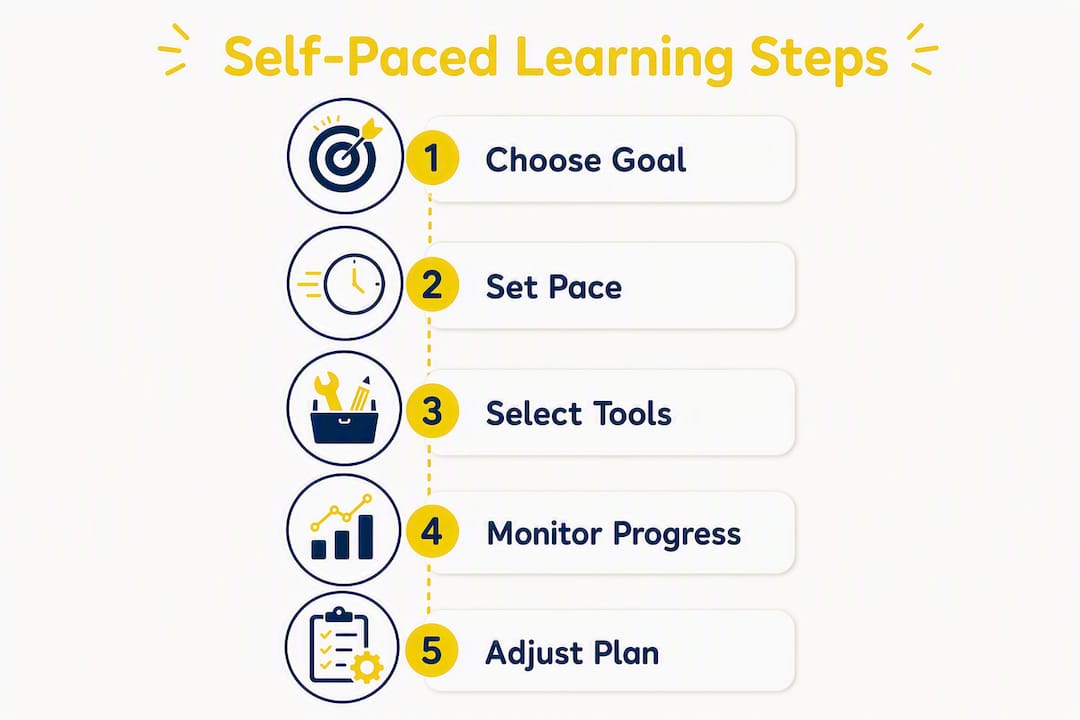
How to succeed as a self-paced learner, step by step
The single biggest predictor of success in a self paced program isn't motivation. It's structure you build before you start.
- Write a specific goal with a deadline. "Finish the maths module" is vague. "Complete units 1–4 by the end of the month, 20 minutes per day" is a plan.
- Block learning time in your calendar. Treat it like a meeting. Unscheduled learning gets displaced by everything else.
- Use microlearning chunks. Aim for 10–20 minute sessions rather than marathon sittings. Shorter sessions reduce fatigue and make it easier to restart after a gap.
- Practice spaced repetition. Revisit material after one day, then three days, then a week. Most platforms with quiz features support this automatically.
- Self-test before moving on. Don't just re-read. Close the material and try to recall the key points. Active retrieval beats passive review for retention.
- Set a weekly progress ritual. Five minutes every Sunday to check what you completed and what's next. This prevents the "I'll catch up later" drift.
- Build in an accountability mechanism. Options include:
- A study buddy who checks in weekly
- A manager or parent who can see your progress dashboard
- Automated nudges from the platform (most good LMS tools offer these)
- A simple habit tracker (paper or digital)
For parents supporting children, automatic screen-time limits on learning apps are a practical way to balance autonomy with healthy boundaries. A child who knows the app turns off after 20 minutes is more focused during those 20 minutes.
Sample weekly schedule for a child (ages 5–11):
- Monday/Wednesday/Friday: 15-minute spelling or maths session after school
- Tuesday/Thursday: 10-minute reading comprehension activity
- Sunday: Parent reviews progress dashboard, adjusts difficulty if needed
Designing effective self paced learning for educators and creators
Good design is what separates a self-paced program with strong completion from one that stalls. The structural fixes with the largest impact are protecting learning time, building milestone check-ins, and using active assignments that require learners to produce something, not just click through slides.
Designer checklist:
- Write clear, measurable learning outcomes for every module (not "understand X," but "identify the three steps of X and apply them to a scenario")
- Break content into modular units of 10–20 minutes maximum
- Embed low-stakes assessments after each unit (auto-graded quizzes, reflection prompts)
- Build milestone nudges: automated messages when a learner hasn't progressed in 5–7 days
- Make progress visible to a manager or parent, not just the learner
- Use artifact-based assignments (a short written response, a completed template) to confirm transfer, not just quiz scores
- Adapt process and product as well as content level for learners with learning differences. Differentiation in home and small-group contexts includes text-to-speech, manipulatives, and flexible ways to demonstrate learning.
Pro Tip: Build your analytics before you launch, not after. Track engagement velocity (how quickly learners move through modules in the first week) as your leading indicator. A learner who completes the first two modules within 48 hours is far more likely to finish than one who logs in once and disappears.
Pro Tip: For child-facing platforms, low-demand learning techniques reduce cognitive friction significantly. Short tasks, immediate feedback, and no-penalty retry options keep neurodivergent learners engaged where high-stakes formats cause shutdown.
How Thepocketmoneygame shows self paced design working in practice
Thepocketmoneygame is a useful concrete example of self paced principles applied to primary-age children. Built by a parent with ADHD and dyslexia, the platform covers spelling, maths, and reading for children aged 5–11, with adaptive difficulty that adjusts in real time based on each child's answers.
The features that address the most common self paced pitfalls:
- Real pocket money rewards: — Children earn actual money for correct answers, which parents control and customize. This solves the accountability problem that kills most self paced programs for children: external motivation until internal motivation develops.
Self-paced learning for children works best when the platform does the scaffolding the child can't yet do for themselves: adjusting difficulty, giving instant feedback, and making progress visible to a caring adult. Thepocketmoneygame is designed around exactly those principles.
For parents choosing a child-focused self paced solution, look for: adaptive content that responds to performance, immediate feedback on every answer, parent visibility into progress, and a reward mechanism that doesn't depend entirely on the child's own motivation.
What the research says about when self paced learning works
The evidence is genuinely positive for specific use cases, and genuinely mixed for others.
| Finding | Evidence | Caveat |
|---|---|---|
| Flexibility improves access | Self paced formats remove scheduling barriers for learners with varied life circumstances | Access doesn't equal completion without accountability design |
| Personalization supports retention | Adaptive paths reduce time-on-task for mastered content and increase it where needed | Requires well-calibrated adaptive engine |
| Scale at low marginal cost | One course can serve large, dispersed audiences without scheduling overhead | Quality control harder at scale |
| Neurodivergent learners benefit | Reduced time pressure and adaptive content lower cognitive load for learners with LDs | Needs voice support and flexible product options to fully deliver |
| Completion risk is real | Programs without milestones and analytics have seen completion rates stall at around 22% without designed-in accountability | Structural fixes (nudges, visibility, active tasks) close the gap significantly |
Key caveats the research highlights:
- Early-career learners and beginners often need more scaffolding than a pure self paced format provides.
- Skills that require live feedback (clinical practice, interpersonal communication) show weaker outcomes in fully self paced formats.
- Social learning and peer accountability are genuine losses in solo self paced programs.
The recommended approach for most real-world implementations is a hybrid: self paced modules for knowledge transfer, with cohort or one-on-one sessions for application and feedback. Track engagement velocity in the first week, module completion cadence at 30 days, and on-the-job application at 60 and 90 days.
Key Takeaways
Self-paced learning works best when flexibility and personalization are the priority, but only when accountability, clear outcomes, and progress visibility are built in from the start.
| Point | Details |
|---|---|
| Definition matters | Self paced means learner controls timing, pace, and sequence — not just "no live sessions." |
| Accountability is the weak point | Without milestone nudges and progress visibility, completion rates can fall to around 22%. |
| Hybrid beats pure self paced for beginners | Early-career learners and skill-based training need live feedback that solo modules can't provide. |
| Design drives outcomes | Clear outcomes, modular units, embedded assessments, and analytics separate high-completion programs from abandoned ones. |
| Thepocketmoneygame for children | Adaptive difficulty, real-money rewards, and a parent dashboard address the three biggest self paced pitfalls for ages 5–11. |
Why the "just give them access" approach to self paced learning almost always fails
The most common mistake parents and organizations make is treating self paced learning as a content delivery problem. Find a good course, give the learner access, and wait for results. It doesn't work that way, and the research is consistent on why.
Completion and transfer depend on structure the learner can't always provide for themselves, especially children and beginners. The autonomy that makes self paced formats attractive is also what makes them fragile. A child who can choose when to practice will often choose never. An adult who can start the compliance module "whenever" will start it the night before the deadline.
What actually works is designing accountability into the format itself: visible progress, external nudges, short sessions with immediate feedback, and a reward mechanism that doesn't wait for the end of the course. These aren't nice extras. They're the difference between a program that runs and one that sits untouched.
The platforms and programs that get this right tend to share one design philosophy: they treat the learner's motivation as something to be supported and structured, not assumed. That's true whether you're designing corporate training or choosing a spelling app for a seven-year-old.
Thepocketmoneygame: self paced learning that actually keeps children going
Most self paced learning tools for children are built on the assumption that curiosity is enough. Thepocketmoneygame takes a different approach: it pairs adaptive, curriculum-aligned practice with real, parent-controlled pocket money rewards for every correct answer.

For parents of children aged 5–11, especially those with ADHD, dyslexia, or other learning differences, this matters. The platform's adaptive difficulty means your child is always working at the right level, not bored and not overwhelmed. Voice support removes the reading barrier. The parent dashboard gives you visibility into exactly what your child has practiced and how they're progressing. And the reward system provides the external motivation that keeps children coming back before they've built the internal habit.
There's no download needed, no hidden costs, and parent controls let you set daily limits and adjust difficulty at any time. See how the platform works and start a free trial to see whether it fits your child's learning style.
Useful sources and further reading
These are the sources worth bookmarking if you want to go deeper on self paced learning design, evidence, or child-focused implementation.
| Source | Why it's useful |
|---|---|
| D2L: Self-Paced Learning Benefits and Best Practices | Practical design guidance, completion rate data, and the three structural fixes that matter most. |
| Wharton: Cohort vs. Self-Paced Learning | Clear framework for choosing between formats, with accountability trade-offs explained. |
| Digital Learning Institute: What Is Self Paced Learning? | Solid definition, benefits overview, and practical tips for learners. |
| Easy LMS: Self-Paced Learning Definition | Accessible explanation of personalization and flexibility benefits. |
| LD@home: Using Differentiation to Support Learning at Home | Evidence-based guidance on adapting content and process for learners with learning differences. |
| The Autism Helper: Differentiating Homeschool Lessons | Practical differentiation strategies for home and small-group contexts. |
| Thepocketmoneygame: Low Demand Learning Guide | Parent-facing guide on reducing cognitive friction for neurodivergent learners in self paced formats. |
| Thepocketmoneygame: Learning App Features | Product detail page covering adaptive difficulty, voice support, and parent controls. |