Do a 5 to 10 minute daily phonics session that follows a simple three-step routine: quick review, teach one small new target, then blend and read a decodable line. That's it. You don't need a lesson plan or a teaching degree. You need consistency, because reading practice every day, even for five minutes, makes a real difference to how fast children pick up decoding.
Here's the timing breakdown you can start using tonight:
- 1 to 2 minutes: Flip through several flashcards your child already knows, saying each sound clean and short.
- 2 to 3 minutes: Introduce one new sound or spelling pattern. Just one.
- 2 to 3 minutes: Blend that sound into a word, then read one line from a decodable book together.
Three tools do the job: a set of flashcards, a tub of magnetic letters, and one decodable reader pulled from your child's school bag or a free library like Oxford Owl.
Key Takeaways
Short, consistent daily phonics sessions built around review, one new target, and decodable reading outperform long or irregular practice for building confident readers.
| Point | Details |
|---|---|
| Keep sessions to 5 to 10 minutes | Daily short sessions build confidence without pressure or burnout on either side. |
| Follow the same three steps | Quick review, one new target, then blend and read a decodable line, every time. |
| Model pure sounds | Say "mmmm," not "muh," to avoid confusing early blending attempts. |
| Match your child's school scheme | Whether it's Letters and Sounds or Read Write Inc., consistency speeds up transfer. |
| Use an adaptive app for consistency | Thepocketmoneygame fits into the blending stage with voice support and reward-based motivation. |
Where to Go for More Phonics Help
- Oxford Owl hosts free decodable e-books sorted by phonics phase.
- BBC Bitesize offers quick parent scripts and rhyming games.
- PhonicsPlay runs screen-based games sorted by phase for reluctant readers.
For a routine that adapts itself automatically, Thepocketmoneygame's main platform covers phonics-linked spelling and reading practice in the same short daily format.
Table of Contents
- What Is Phonics and How Do Schools Teach It?
- The Five Core Phonics Skills Worth Practicing
- A Timed Daily Phonics Routine You Can Copy Tonight
- Playful Phonics Games for Home Practice
- Where to Find Free Decodable Books and Phonics Games
- Fixing Common Phonics Mistakes at Home
- What Is the Year 1 Phonics Screening Check?
- How an Adaptive App Can Slot into Your Phonics Routine
- Frequently Asked Questions
- Sources
What Is Phonics and How Do Schools Teach It?
Phonics is the method that links letters to the sounds they make, so children can sound out unfamiliar words instead of guessing from pictures or memorizing whole words. Most UK schools teach it through synthetic phonics, meaning children learn individual sounds first, then blend them together to build whole words from left to right.
You'll likely see one of a few named schemes come home in your child's book bag:
- Letters and Sounds or its updated equivalents, taught in phases
- Read Write Inc., which pairs sounds with pictures and stories
- Oxford Reading Tree, home to the Biff, Chip and Kipper decodable book series
Matching your home practice to whatever sequence your child's teacher is using matters more than picking the "best" scheme. Consistency between school and home helps a child transfer a skill learned in one place straight into the other, rather than juggling two different sets of rules for the same letters.
The Five Core Phonics Skills Worth Practicing
Not every phonics activity earns its place in a short session. Effective at-home practice concentrates on five elements, and hitting these five consistently beats a scattershot approach to worksheets.
- Letter-sound knowledge — flip flashcards daily and say the sound, not the letter name.
- Blending — push sounds together left to right, like "c...a...t" into "cat," using magnetic letters your child slides toward each other.
- Segmenting — say a word slowly and ask your child to pull out each sound for spelling, like tapping fingers for each phoneme.
- Spelling (encoding) — write the sounds your child hears using a whiteboard or finger in flour.
- Decodable reading — read one line from a book matched to sounds your child already knows, not one that's too far ahead.
Five to ten minutes a day covers all five without burning either of you out, and that short window is the evidence-backed sweet spot for building confidence without pressure.
A Timed Daily Phonics Routine You Can Copy Tonight
Here's the same routine from the opening, stretched out with real scripts and word examples so you're not guessing what to say.
- 0:00 to 1:30, quick review. Show 5 to 8 known flashcards. Say: "What sound?" Keep it snappy.
- 1:30 to 4:00, teach one target. Introduce a new sound, like "sh" or "oa." Model it with a pure phoneme, not a syllable.
- 4:00 to 6:00, blend and read. Use words featuring that sound (Phase 2 style: "sh" plus "ip" for "ship"; later, "oa" plus "t" for "oat"), then read one decodable line and celebrate out loud.
Your script for modeling sounds: say "mmmm," not "muh." Say "sssss," not "suh."
Pro Tip: Parents commonly add an extra vowel when saying letter sounds, turning "t" into "tuh" and "b" into "buh." That tiny habit confuses blending, because "tuh" plus "op" doesn't sound like "top." Practice saying pure, clipped sounds in the mirror before you try them with your child.
Playful Phonics Games for Home Practice
Some days your child has the focus for a full session. Other days, five minutes of a game is all you'll get, and that's fine. Sort your options by the skill you're targeting.
Sound awareness:
- Go on a sound scavenger hunt around the house, hunting for objects starting with today's target sound, a favorite among simple multi-sensory activities.
- Clap out syllables in family members' names.
Blending:
- Build words with magnetic letters on the fridge, sliding them together as you say each sound.
- Play "robot talk," saying a word in separate sounds and having your child guess it.
Segmenting and spelling:
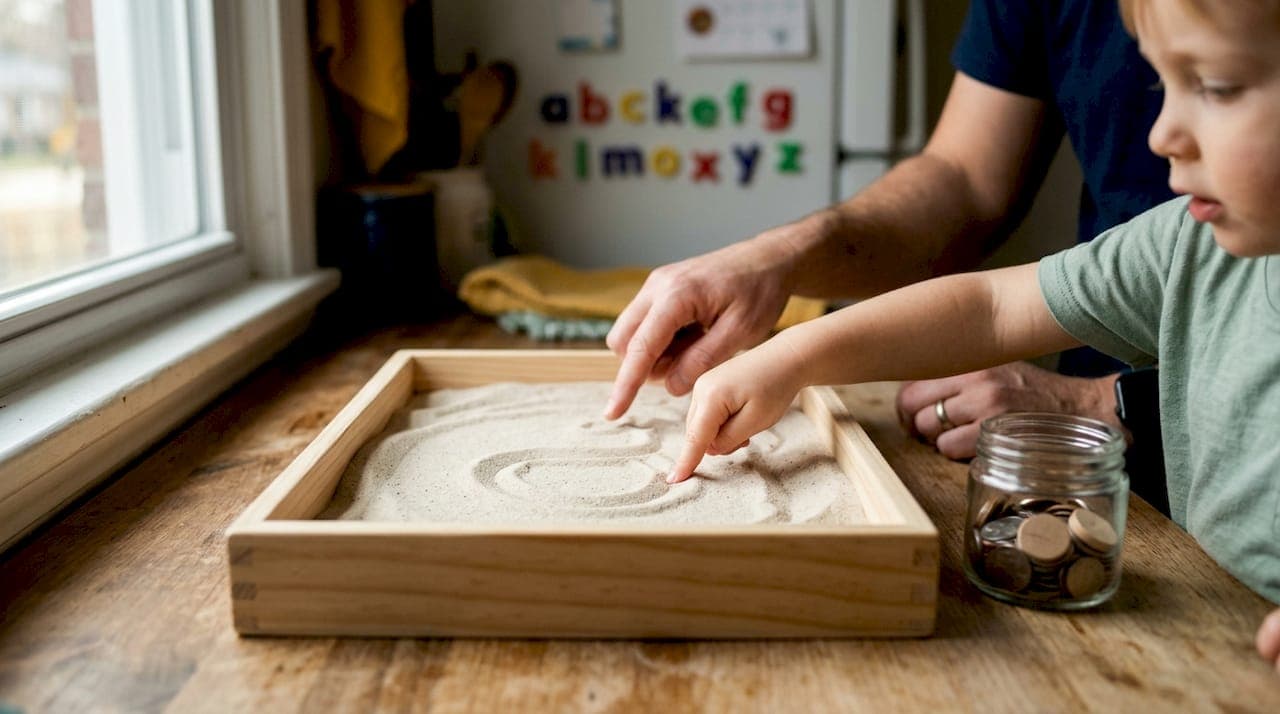
- Trace target letters in a tray of sand, shaving foam, or flour, so movement reinforces the shape and sound together.
- Use a whiteboard for quick "sound tap" spelling, tapping one finger per phoneme.
Decodable reading:
- Read one page from a Biff, Chip and Kipper title or another decodable reader matched to your child's current sounds.
- Take turns reading alternate lines to keep energy up during longer books.
For children who struggle with sitting still or focusing on flashcards, the sand tray and robot talk games work especially well, since they add movement and play instead of demanding stillness.
Where to Find Free Decodable Books and Phonics Games
You don't need to buy anything to start today. Three free resources cover most of what you'll need:
- Oxford Owl offers a free digital library of decodable e-books sorted by phonics stage, plus parent guidance on pronunciation.
- BBC Bitesize provides short activities and scripts for early sounds, rhyming, and quick practice sessions.
- PhonicsPlay runs interactive games sorted by phase, useful for children who respond better to a screen than a worksheet.
When picking a decodable book, choose one where your child can sound out roughly 90% of the words using sounds they've already learned. A book that's too far ahead turns reading practice into guessing practice, which undoes the whole point. Flashcards, magnetic letters, and read-aloud apps with voice support round out a low-tech toolkit that costs very little and works for years.
Fixing Common Phonics Mistakes at Home
A few small habits derail more sessions than any missing resource does.
- Adding "uh" to sounds ("buh" instead of "b") confuses blending. Fix it by modeling pure, clipped sounds yourself first.
- Letting a child guess from the first letter skips the actual skill. Prompt with "sound it out" instead of confirming a guess.
- Skipping blending practice and jumping straight to whole-word reading leaves gaps. Slow down and blend aloud together.
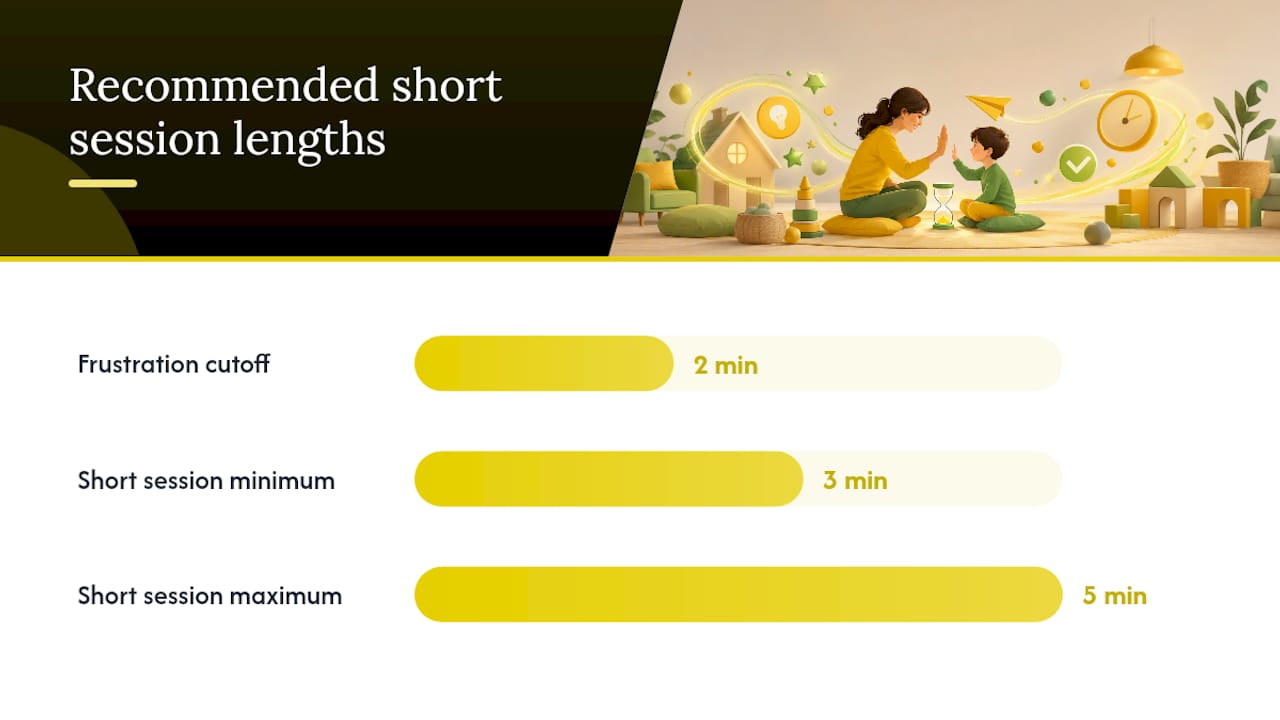
For children with attention differences, sensory sensitivities, or English as an additional language, shorten sessions to 3 to 5 minutes, repeat the same small step across several days, and keep the routine predictable rather than novel.
Pro Tip: Neurodiverse learners often do better with immediate feedback and short, frequent bursts rather than one longer session. If your child gets frustrated after two minutes, stop there. Five short check-ins across a day beat one long, tense sit-down.
Contact the teacher if your child consistently reverses letters past age 7, avoids reading aloud entirely, or shows no progress after several weeks of daily practice. Bring specific examples: which words tripped them up, and on what dates.
What Is the Year 1 Phonics Screening Check?
The phonics screening check assesses whether a child can decode short, simple words, both real and made-up, to confirm they're on track with blending skills. Daily blending and decodable reading practice builds the automaticity that makes this check feel routine rather than stressful. If you're unsure whether your child's home book matches their actual level, mention your daily routine to the teacher directly and ask for guidance.
Real progress happens in tiny sessions, not marathon ones
I've seen the biggest wins come from parents who stopped trying to schedule a "proper" 30-minute lesson and instead squeezed in five honest minutes at breakfast or bath time. Motivation built from small, immediate wins outlasts motivation built from pressure. That's part of why I built a learning platform aimed at neurodiverse learners in the first place: short bursts, instant feedback, and a reason to keep coming back the next day.
How an Adaptive App Can Slot into Your Phonics Routine
Some days you'll have the energy for flashcards and sand trays. Other days you just need something reliable to fill the blend-and-read stage of your routine without you having to plan it. That's the gap Thepocketmoneygame fills: an adaptive learning app that adjusts question difficulty to your child's actual level, reads instructions aloud through built-in voice support, and pays out small real pocket money for correct answers instead of relying on stickers.
Slot it into the 4:00 to 6:00 blending stage of your routine, or use it on days when you're too tired to script your own session. You control the difficulty, the daily question cap, and the reward amount from a parent dashboard, so it stays a tool you run, not one that runs you. If you want to try it before committing, Thepocketmoneygame's no-download games let your child start a session in a browser, and a free trial is the easiest way to see whether the reward system actually motivates your particular child.
Frequently Asked Questions
How long should a phonics practice session be at home? Five to ten minutes a day is enough, done consistently, and beats one long weekly session by a wide margin for building automaticity.
What are the best free phonics resources for home practice? Oxford Owl, BBC Bitesize, and PhonicsPlay all offer free decodable books, activities, or games without requiring a subscription.
What's the most common mistake parents make with phonics? Adding an extra vowel sound to letters, saying "buh" instead of "b," which makes blending words together noticeably harder for children.
Do I need to buy decodable books, or can I find free ones? Free digital decodable libraries exist through Oxford Owl, and many schools send home matched readers like the Biff, Chip and Kipper series already.
How does home practice connect to the Year 1 phonics screening check? Regular blending and decodable reading at home builds the automatic decoding skills the check measures, so daily practice supports readiness naturally.
Sources
- Phonics - Oxford Owl for Home
- Practising phonics at home – Words for Life (National Literacy Trust)
- Tips to support your child's phonics at home - BBC Bitesize