
For UK parents wanting adaptive, reward-based maths practice for primary children, Thepocketmoneygame is the strongest single platform to try first — it covers KS1 and KS2, pays children real pocket money for correct answers, and was built specifically with neurodiverse learners in mind. Here's how the top options stack up by engagement style:
- Thepocketmoneygame — best for parents who want UK curriculum alignment plus a real, tangible reward. Children earn actual pocket money per correct answer. Free 7-day trial, monthly or annual subscription. Ages 5–11, KS1 and KS2.
- Fantasy-RPG platforms (e.g., Prodigy-style) — best for story-driven children who resist drill. Maths is woven into quests and battles. Subscription required for full access; check UK curriculum mapping carefully.
- Streak-based practice apps (e.g., IXL) — best for habit-builders who respond to progress streaks and detailed skill reports. Strong standards alignment; parents should verify explicit KS1/KS2 topic sequencing.
- Times-table drill services (e.g., Times Tables Rock Stars) — best for focused times-table fluency. Low cost, highly effective for recall, but not a full curriculum replacement.
- Multi-mini-game services (e.g., Sumdog, DoodleMaths) — best for children who need variety to stay engaged. Adaptive difficulty, parental dashboards, and UK curriculum notes vary by platform.
- Classroom-oriented curriculum platforms (e.g., EducationCity) — best when a child's school already uses the platform and teacher-assigned content matters.
All six options are available in the UK and cover the 5–11 age range. Every platform listed offers a free trial or free tier.
Table of Contents
- How do these Mathletics alternatives compare at a glance?
- How do these platforms actually differ from Mathletics day to day?
- How to pick the right platform for your child
- Short reviews: what each option actually does
- How we picked and evaluated these alternatives
- Key Takeaways
- Why the reward model matters more than parents realize
- Thepocketmoneygame: the one platform worth trying first
- Useful UK sources and where to read more
How do these Mathletics alternatives compare at a glance?
| Platform type | Best for | KS1/KS2 alignment | Price / trial | Gamification | Adaptive learning | Parent dashboard | Accessibility / neurodiversity | Devices |
|---|---|---|---|---|---|---|---|---|
| Thepocketmoneygame | Real-money rewards + curriculum | Strong (KS1 & KS2) | 7-day free trial; monthly/annual | Real pocket money per correct answer | Adaptive difficulty + voice support | Yes — progress tracking, daily caps | Voice support, ADHD/dyslexia-friendly | iOS, Android, Web |
| Fantasy-RPG platform | Story-driven learners | Partial — verify UK mapping | Free base; subscription for full access | Narrative quests, collectible characters | Adaptive within quests | Basic | Limited accessibility features | iOS, Android, Web |
| Streak-based practice app | Habit-builders, data-driven parents | Strong (verify KS1/KS2 sequence) | Subscription; short free trial | Streaks, certificates, points | Strong adaptive engine | Detailed skill reports | Some; check per platform | iOS, Android, Web |
| Times-table drill service | Times-table fluency | Focused (multiplication only) | Low-cost subscription | Rock-star personas, leaderboards | Limited — drill-focused | Basic progress view | Moderate | iOS, Android, Web |
| Multi-mini-game service | Variety seekers | Moderate — check explicitly | Subscription; free trial | Mini-games, coins, avatars | Moderate adaptive | Parental reports available | Varies | iOS, Android, Web |
| Classroom curriculum platform | School-linked homework | Strong (teacher-assigned) | School/family subscription | Curriculum-based activities | Teacher-directed | Teacher and parent view | Moderate | Web, some apps |
A note on "strong UK alignment" vs. "partial":
- Strong means the platform explicitly maps content to UK National Curriculum year groups (Year 1–6) and uses UK terminology (e.g., "number bonds," "column method").
- Partial means the platform claims curriculum alignment but may default to non-UK progressions or terminology — always check UK-specific mapping before subscribing.
- Focused means the platform covers one topic area (times tables) rather than the full KS1/KS2 maths curriculum.
How do these platforms actually differ from Mathletics day to day?
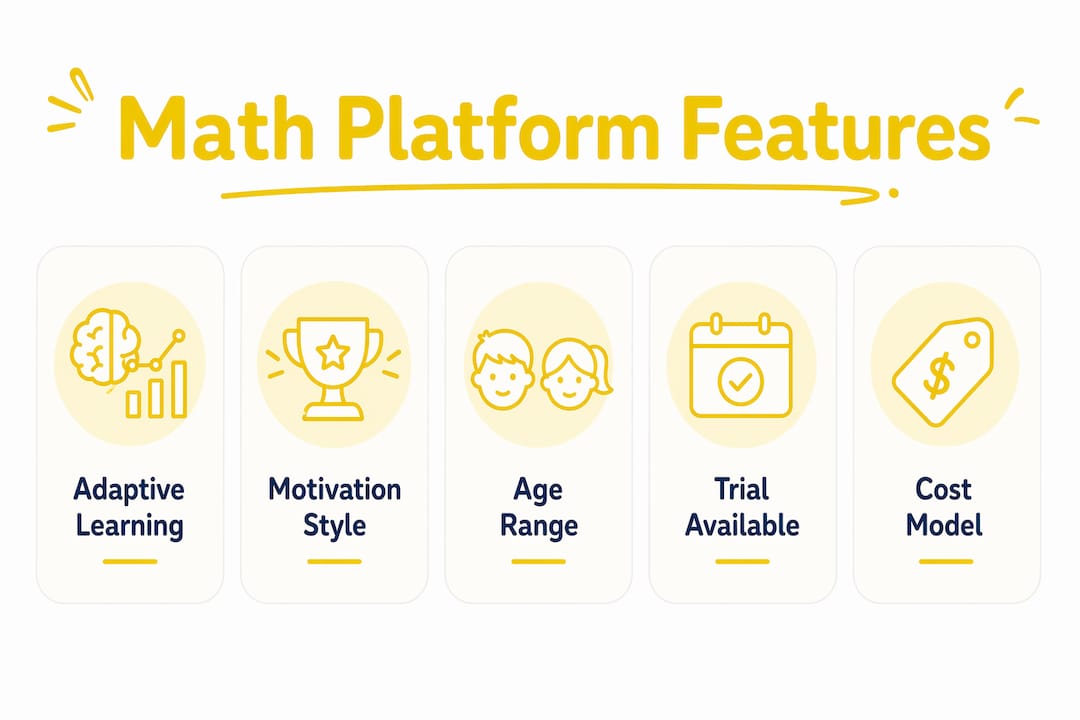
The biggest practical differences show up in three areas: how the platform adapts, how it motivates, and how much it costs beyond the headline price.

Adaptive learning ranges from genuinely responsive engines (the platform detects a gap and adjusts the next question automatically) to manual level-setting where a parent or teacher chooses the difficulty. Streak-based apps and Thepocketmoneygame tend to offer true adaptive behavior; classroom-oriented platforms often rely on teacher-directed differentiation, which works well at school but requires more parental input at home.
Gamification tone matters more than parents expect. Narrative RPG experiences and streak-based rewards are the two dominant engagement patterns, and they suit very different children. A child who finds timed drills stressful will often thrive in a quest-based world. An anxious child who hates leaderboards may do better with low-pressure cosmetic rewards or, as with Thepocketmoneygame, a tangible real-world reward they can actually spend.
Monetization is where independent reviews consistently flag problems. Platforms that offer a "free" base tier sometimes lock motivating rewards, characters, or curriculum content behind in-app purchases on top of the subscription. During any free trial, watch for aggressive upsells — paywalled rewards that children can see but not access, or unclear billing that auto-renews without a reminder.
Pro Tip: During the first week of any free trial, let your child use the platform independently and watch what they ask for. If they keep hitting a paywall for features that look like core content, that's a sign the "subscription" price isn't the real cost.
Parental dashboards also vary significantly. Teacher-facing platforms like classroom curriculum tools offer assignable content and assessment modes that are excellent for school use but can feel complex for home-only parents. Thepocketmoneygame and streak-based apps tend to offer cleaner parent-facing progress views with less setup required.
How to pick the right platform for your child
Start with one question: What makes your child actually want to keep going? The answer shapes everything else.
Decision checklist:
- Engagement match — Does your child respond to stories and quests, streaks and stats, or real-world rewards? Match the platform's gamification style to that preference.
- Curriculum alignment — Does the platform explicitly list UK National Curriculum year groups? "Aligned" without UK-specific detail is not enough.
- Evidence of adaptivity — Does the difficulty change automatically, or do you have to adjust it manually? Test this in week one.
- Accessibility features — Does the platform offer voice support, adjustable text, or low-pressure modes? Especially worth checking if your child has ADHD, dyslexia, or anxiety around maths.
- Reporting depth — Can you see which topics your child is struggling with, not just how many questions they answered?
- Device support — Will your child use a tablet, phone, or laptop? Check the app works well on your actual device before committing.
- Pricing transparency — Is the subscription price the full price, or are rewards and content gated behind extras?
A practical trial plan:
- Week 1 — Focus on engagement. Does your child ask to use it, or do you have to push them?
- Week 2 — Check progress. Has the difficulty adapted? Are the topics matching what they're doing at school?
- Week 3 — Review the parent dashboard. Is the reporting clear enough for you to act on?
Red flags to stop a subscription: aggressive upsells mid-session, unclear auto-renewal billing, questions marked wrong due to platform bugs, or no accessibility options for a child who needs them. Pairing two platforms — one curriculum-aligned for homework, one game-focused for independent practice — often works better than expecting one app to do everything.
Short reviews: what each option actually does
Thepocketmoneygame
Built by a parent with ADHD and dyslexia, this platform covers KS1 and KS2 maths, spelling, and reading. Children earn real pocket money per correct answer — amounts set by the parent. Voice support and adaptive difficulty make it genuinely accessible for neurodiverse learners. The parent dashboard shows progress by topic, and daily question caps prevent burnout. It's the only platform here where the reward is something a child can actually spend. KS2 maths games cover fractions, times tables, and arithmetic. 7-day free trial, then monthly or annual subscription.
Fantasy-RPG platforms
Maths questions are embedded in battles and quests, which works brilliantly for children who switch off during straightforward drill. UK curriculum mapping is the main thing to verify — some platforms default to US Common Core sequencing. The free tier is often generous, but full curriculum access and character unlocks typically require a paid subscription. Not ideal for children who find narrative distracting.
Streak-based practice apps (IXL)
IXL offers a deep library of skills mapped to year groups, with detailed real-time reports that data-driven parents appreciate. The adaptive engine is strong. The interface is less visually exciting than RPG platforms, which suits some children and puts others off. Teacher-tested for both conceptual learning and fluency practice. Subscription required; short free trial available.
Times-table drill services (Times Tables Rock Stars)
Highly focused on multiplication recall, with a rock-star persona and leaderboard mechanic that many primary children love. Very low cost. Excellent for fluency but not a replacement for a full curriculum tool — pair it with a broader platform for complete KS1/KS2 coverage. If your child struggles with times tables specifically, this is worth adding as a second app. For extra support at home, helping your child with times tables is a practical starting point.
Multi-mini-game services (Sumdog, DoodleMaths)
Both offer variety that prevents the repetition fatigue common with single-format apps. DoodleMaths adapts based on a child's daily performance and aligns to the UK curriculum. Sumdog mixes maths games with reading and is popular in UK primary schools. Parental reporting is available on both. Neither offers the tangible real-world reward model of Thepocketmoneygame, but both are solid choices for children who need constant novelty to stay engaged.
Classroom-oriented curriculum platforms (EducationCity)
Best when a child's school already subscribes, since teacher-assigned content and school-linked reporting are where these platforms shine. Home-only subscriptions are available but can feel underused without teacher input. Strong UK curriculum alignment and differentiation tools signal school-level readiness. Less gamified than other options here.
How we picked and evaluated these alternatives
Every platform on this list was selected against a consistent set of filters: UK availability, KS1 and KS2 coverage, a subscription or trial model, and evidence of adaptive learning. From there, each was evaluated on UK curriculum mapping, gamification style, parental reporting quality, accessibility features, pricing transparency, and trial experience.
Independent educator roundups — including teacher-curated lists that distinguish conceptual tools from fluency practice libraries — informed the category distinctions. The selection filters excluded platforms without explicit UK curriculum mapping or those aimed primarily at secondary or post-primary learners.
A note on "screen-free" balance: if you're also thinking about screen-free activities for kids to complement digital practice, that's worth building into your weekly routine alongside any subscription platform.
Key Takeaways
For UK parents choosing between online math practice alternatives, Thepocketmoneygame is the strongest single starting point — it combines KS1/KS2 curriculum alignment, real-money rewards, and neurodiversity-friendly design in one subscription.
| Point | Details |
|---|---|
| Match gamification to your child | RPG quests suit story-driven learners; streaks suit habit-builders; real rewards suit tangible-reward learners. |
| Verify UK curriculum mapping | "Aligned" without explicit KS1/KS2 year-group mapping may mean US or non-UK sequencing. |
| Watch for hidden costs | Paywalled rewards and unclear auto-renewal are the most common complaints in independent reviews. |
| Pair platforms if needed | A curriculum-aligned app for homework plus a game-focused app for independent practice reduces burnout. |
| Try Thepocketmoneygame first | It covers KS1/KS2, pays real pocket money per correct answer, and includes voice support for neurodiverse learners. |
Why the reward model matters more than parents realize
Most maths apps reward children with virtual coins, badges, or characters they can never spend. That works for some children — but for kids with ADHD, dyslexia, or simply a low tolerance for abstract praise, a virtual trophy does very little after the first week. The novelty fades, and so does the habit.
What actually sustains practice over months is a reward that means something outside the app. Real pocket money does that. It connects the effort of getting a maths question right to something a child can hold, save, or spend — which is also, quietly, a lesson in financial literacy. That's not a feature you'll find on most online math practice alternatives, and it's the reason Thepocketmoneygame was built the way it was.
The practical tip worth remembering: use a curriculum-aligned platform for school-linked homework (so topics match what the teacher is covering), and use a lower-pressure, reward-rich platform for independent practice. That separation keeps homework purposeful and keeps extra practice enjoyable. Combining platforms this way consistently produces better long-term engagement than expecting one app to carry all the weight.
Thepocketmoneygame: the one platform worth trying first
If you've been searching for Mathletics substitutes that actually motivate your child beyond the first week, Thepocketmoneygame offers something genuinely different: children earn real pocket money for every correct answer, with the amount and daily limits set entirely by you.
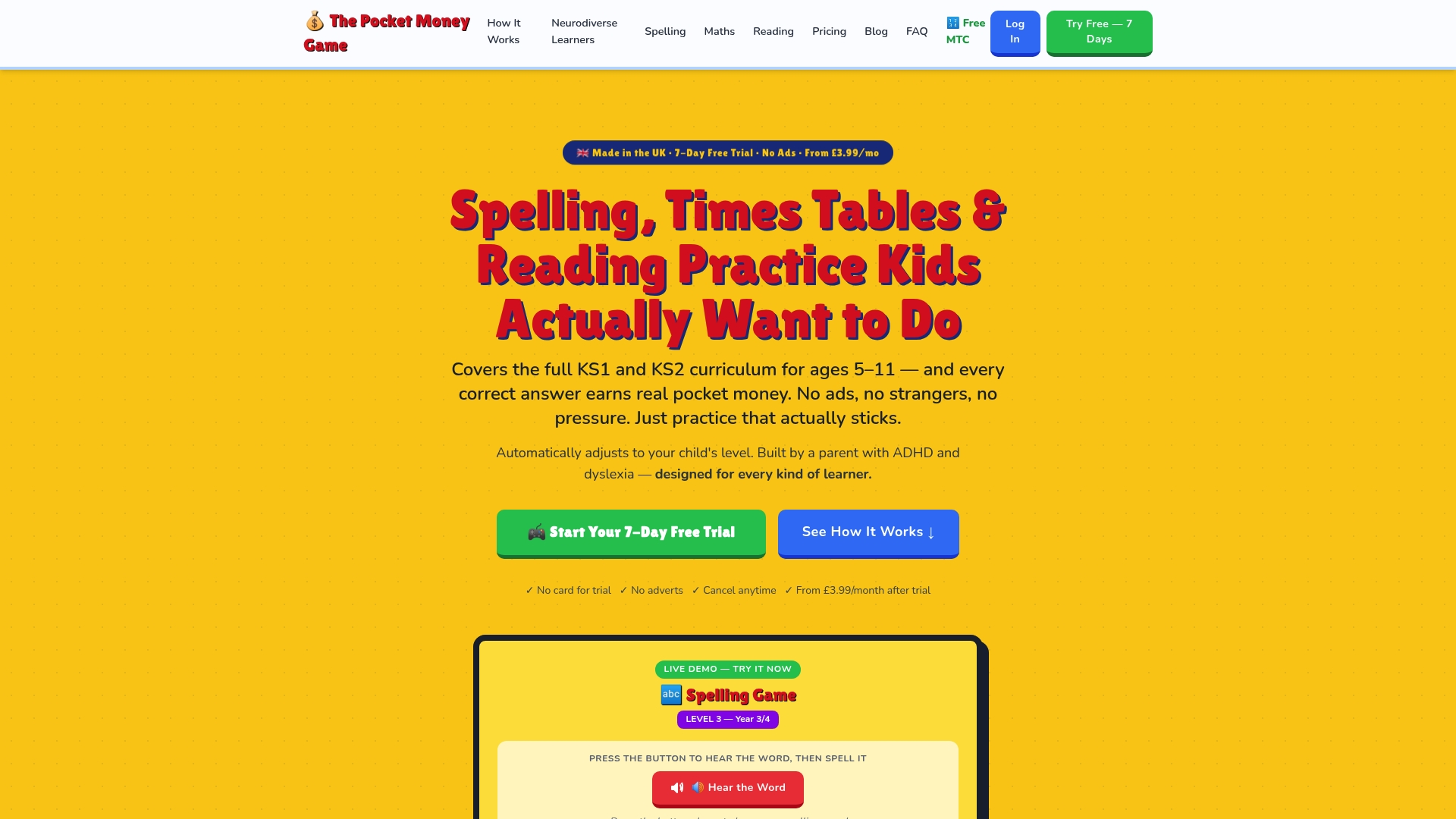
It covers KS1 and KS2 across maths, spelling, and reading. The adaptive difficulty adjusts to your child's level automatically, and voice support makes it accessible for children with dyslexia or ADHD. The parent dashboard shows progress by topic so you can see exactly where your child needs more practice. It was built for neurodiverse learners from the ground up, not retrofitted. Start your 7-day free trial today and see whether your child asks to use it again tomorrow.
Useful UK sources and where to read more
- Teacher-Tested Math Apps | Edutopia — Independent teacher survey distinguishing conceptual tools from fluency practice libraries. Useful for understanding why different platforms suit different learning goals.
- Assign curriculum content and view results | Mathletics knowledgebase — Official documentation of Mathletics' teacher-facing features; useful benchmark for comparing what alternatives offer parents and teachers.
- Classroom strategies and tips | Mathletics knowledgebase — Covers differentiation and blended learning features; signals school-level platform maturity.
- Best Alternatives to Mathletics (2026) | MathCraft — Independent comparison covering engagement styles, monetization red flags, and UK curriculum mapping advice.
- Best educational apps for primary school children in the UK | Thepocketmoneygame — Editorial roundup with UK curriculum notes and age-suitability guidance for KS1 and KS2.
- Why reward-based learning works for children with ADHD | Thepocketmoneygame — Research-backed explanation of the real-money reward model and its benefits for neurodiverse learners.
- Screen-free activities for kids | G45 Hero Cast — Practical ideas for balancing digital practice with offline learning activities.
Recommended
- Free Spelling & Maths Game for UK Children | London, Manchester, Birmingham & More
- Blog | The Pocket Money Game — Tips for Parents, ADHD Learning & UK Curriculum
- The Pocket Money Game in London — KS1 & KS2 Spelling, Maths and Reading
- The Pocket Money Game in Kent — KS1 & KS2 Spelling, Maths and Reading