
What makes the best homework app for UK primary school children?
The best homework app for a primary school child isn't the one with the most features. It's the one your child will actually use, again and again, without you having to beg. For UK parents, that means an app built around three things: adaptive difficulty that grows with your child, voice support that removes barriers for neurodiverse learners, and a reward system that makes practice feel worth it.
Here's what genuinely good apps for KS1 and KS2 learners have in common:
- Curriculum alignment: Content maps to the UK National Curriculum, so what your child practices at home reinforces classroom goals rather than pulling in a different direction.
- Active recall over answer-giving: The strongest study apps promote deep learning through retrieval practice and spaced repetition, not just quick answers.
- Parental visibility: Progress tracking lets you see exactly where your child is struggling, so your support is targeted, not guesswork.
- Accessibility: Voice-first interfaces help neurodiverse children express understanding without the friction of typing.
- Privacy: UK GDPR-compliant data handling and multi-device compatibility are non-negotiable for family use.
Thepocketmoneygame, recognized in The Best Educational Apps for Primary School Children in the UK (2025), brings all of these together in one platform built specifically for ages 5–11.
Table of Contents
- How adaptive learning makes homework apps work harder for your child
- Thepocketmoneygame: built for exactly this
- Key Takeaways
How adaptive learning makes homework apps work harder for your child
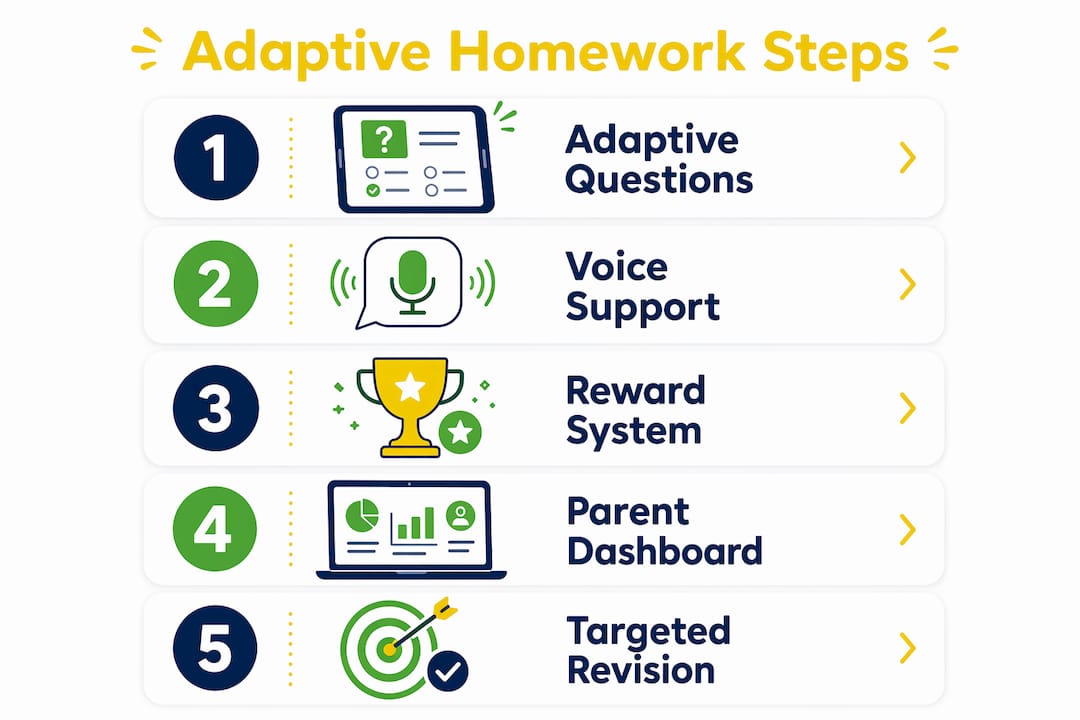
Adaptive learning means the app pays attention. When your child gets a question wrong, the platform adjusts. When they're flying through spelling, it pushes harder. That responsiveness is what separates a genuinely useful homework helper app from a digital worksheet.
Voice support takes this further. For children with dyslexia, ADHD, or EAL needs, reading dense text on a screen creates a wall before learning even begins. Voice-guided interfaces reduce that cognitive load, letting children show what they actually know. Breaking tasks into small, incremental steps alongside voice interaction significantly helps neurodivergent children stay focused and build confidence.
Reward-based motivation is the other piece most apps miss. Real pocket money for correct answers changes the emotional experience of homework entirely, particularly for children with ADHD and dyslexia who have often already decided they're "bad at school." Thepocketmoneygame was built by a parent with ADHD and dyslexia for exactly this reason. The reward isn't a sticker or a badge. It's real, and children feel that difference.

Parents stay in control through a dashboard that shows progress across spelling, maths, and reading. You can adjust lesson difficulty, set daily question caps, and customize reward amounts. That level of control means the app works for your child's pace, not a generic average.
Pro Tip: When evaluating any homework tracking app, check whether it filters by weak topics and lets you target revision there. Apps that surface specific gaps, rather than just overall scores, are the ones that produce real improvement over time.
For families exploring WJEC curriculum resources alongside a home learning platform, pairing structured revision materials with an adaptive app creates a genuinely complete study routine.
Thepocketmoneygame: built for exactly this
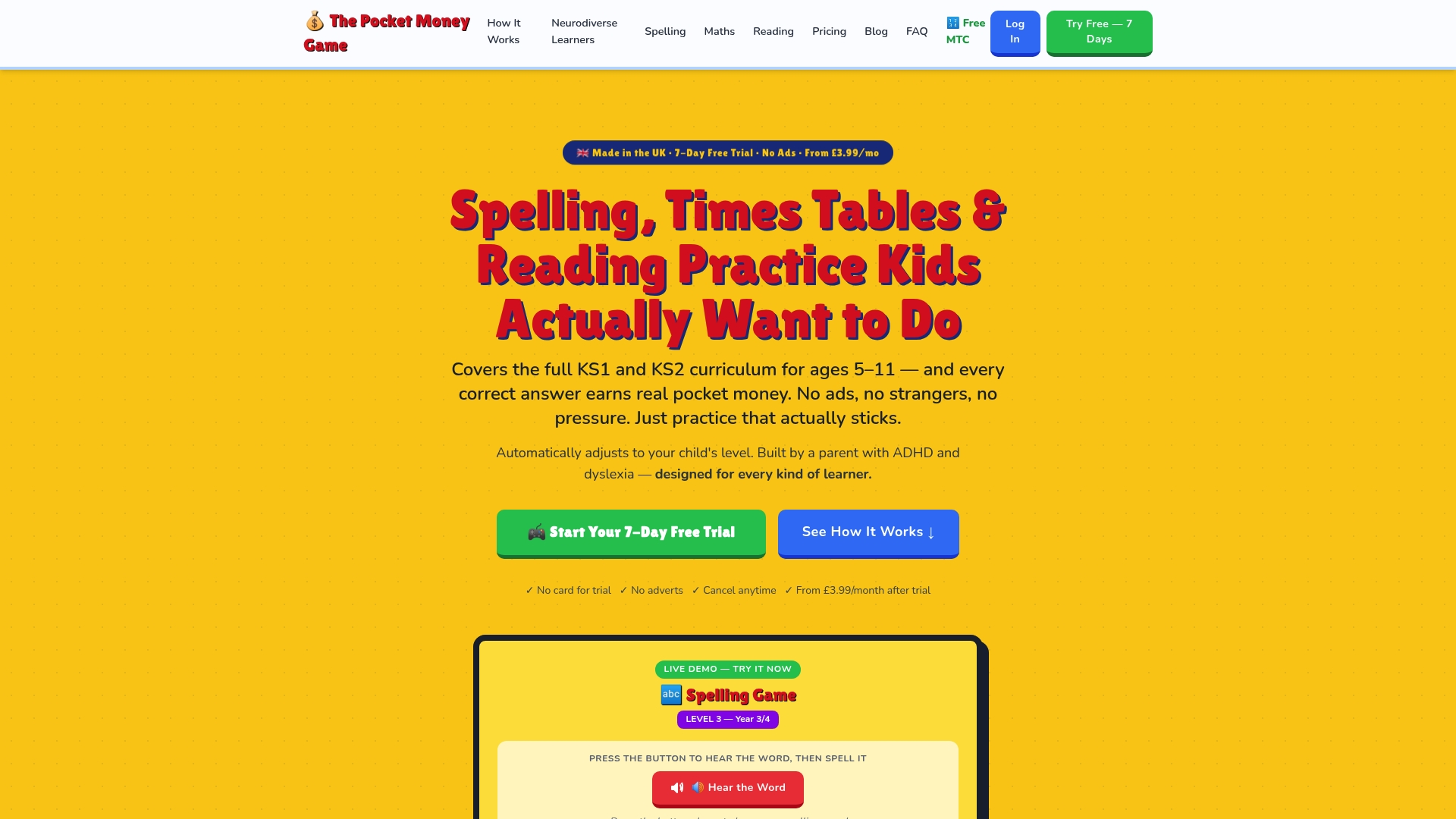
If you've been searching for a homework app that adapts, motivates, and keeps you informed, Thepocketmoneygame is built for your family. Children aged 5–11 practice spelling, maths, and reading through games that adjust to their level, earn real pocket money for correct answers, and build the kind of confidence that carries into the classroom. You get a parent dashboard with full visibility and control. No guessing whether it's working.
The platform was built by a parent who understood firsthand what neurodiverse children need from a learning app. Try a free trial at Thepocketmoneygame and see the difference a reward-driven, curriculum-aligned platform makes.
Key Takeaways
The best homework app for UK primary children combines adaptive difficulty, voice accessibility, real rewards, and parent-controlled progress tracking aligned to KS1 and KS2 standards.
| Point | Details |
|---|---|
| Curriculum alignment matters | Apps must map to KS1 and KS2 standards so home practice reinforces classroom learning. |
| Active recall beats answer-giving | Apps using retrieval practice and spaced repetition build deeper, lasting understanding. |
| Voice support opens doors | Voice-first interfaces reduce cognitive load for neurodiverse and EAL learners significantly. |
| Real rewards change behavior | Tangible incentives like pocket money sustain motivation, especially for children with ADHD or dyslexia. |
| Thepocketmoneygame | Covers spelling, maths, and reading for ages 5–11 with adaptive difficulty, real pocket money rewards, and a full parent dashboard. |
Recommended
- The Best Educational Apps for Primary School Children in the UK (2025) — The Pocket Money Game
- Blog | The Pocket Money Game — Tips for Parents, ADHD Learning & UK Curriculum
- Free Spelling & Maths Game for UK Children | London, Manchester, Birmingham & More
- The Pocket Money Game in Kent — KS1 & KS2 Spelling, Maths and Reading